Motor Toon Grand Prix
Motor Toon Grand Prix: Cartoon Kart Racing on the Original PlayStation
Motor Toon Grand Prix is a cartoon-style kart racing game built around exaggerated physics, rubber-banding AI, and tracks that bend and twist like animated set pieces. Released for the original PlayStation, it was Polyphony Digital’s debut project before the studio became known worldwide for Gran Turismo.
The game puts players behind the wheel of stylized characters racing through worlds that feel pulled straight out of a Saturday morning cartoon. Loops, jumps, and bizarre track gimmicks are the norm rather than the exception. It leans into chaos instead of realism—and that’s the whole point.
Development and Release
Motor Toon Grand Prix was developed by Polyphony Digital, the same team that would later create the Gran Turismo series. The original Japanese version launched in 1994. A sequel followed in 1996, and that second version eventually reached North America and Europe in 1997, often just under the name Motor Toon Grand Prix overseas.
Kazunori Yamauchi, who’d go on to direct Gran Turismo, served as the producer. The cartoon styling here is a strange contrast to what the studio would become famous for—but the obsession with handling and car behavior was clearly already there, just dressed up in goofier clothing.
Gameplay
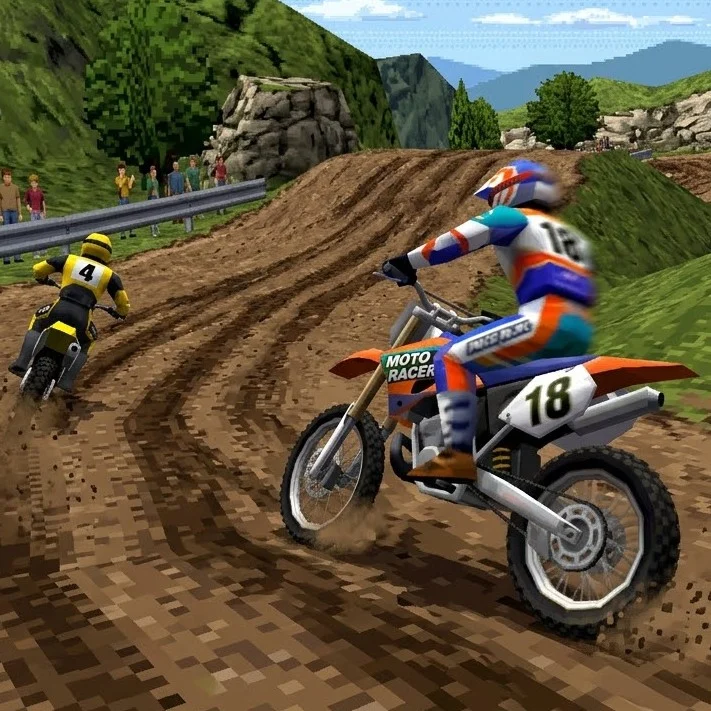
Players pick from a roster of cartoon racers, each with their own vehicle and personality, then compete across a series of themed circuits. Tracks twist through pirate ships, haunted castles, sky-high cities, and other oddball settings. Power-ups scattered across the courses let racers fire missiles, drop hazards, or speed-boost past the pack.
The handling has weight to it. Cars drift, slide, and bounce in ways that feel more grounded than most kart racers from the era. That’s where the Polyphony fingerprint shows.
Up to two players can race head-to-head in split-screen, and there’s a Grand Prix mode where points stack across multiple races to crown a champion. A practice mode and time trials round out the options for players who want to learn the courses inside and out.
Visuals and Style
The art direction goes hard on cartoon energy. Characters mug for the camera, vehicles squash and stretch when they crash, and tracks are packed with background gags. For 1994 hardware, the world feels surprisingly alive.
The sequel pushed the visuals further with more detailed environments and smoother animation. It’s the version most players outside Japan ended up with.
Reception
Motor Toon Grand Prix got a mixed-to-positive response when it first arrived. Critics liked the personality and the track design but felt the racing itself could feel sluggish at times. The 1996 sequel landed better, with reviewers pointing to tighter controls and a stronger sense of speed.
It never reached the cultural reach of Mario Kart, but it built a small, loyal following—especially among players who appreciated the technical handling buried under the cartoon coat of paint.
Legacy
The game is mostly remembered now as a curiosity. The studio that made a quirky kart racer went on to build one of the most respected racing simulator franchises ever. You can see the early sketches of that obsession in how the cars move here, even if the visuals are pure slapstick.
For collectors and PlayStation history fans, Motor Toon Grand Prix is a snapshot of a studio finding its voice before locking into the genre that would define it.
As always, remember to have fun!