Dance Dance Revolution – Disney Mix


















Dance Dance Revolution Disney Mix – Classic Rhythm Game with Disney Characters
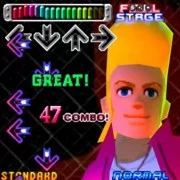
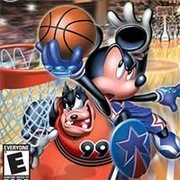
Dance Dance Revolution Disney Mix is a music and rhythm game that pairs Konami’s iconic step-matching gameplay with animated Disney characters and remixed versions of classic Disney songs. Players follow on-screen arrow prompts in time with the beat, dancing alongside Mickey Mouse, Donald Duck, Goofy, and other familiar faces.
The game first hit Japanese arcades on November 30, 2000 under the name Dancing Stage featuring Disney’s Rave. A PlayStation version landed the same day, titled Dance Dance Revolution Disney’s Rave. North America got the release on September 18, 2001, with a worldwide rollout following on September 28 of that year. Konami Computer Entertainment Tokyo handled development, with Konami publishing.
Gameplay and Modes
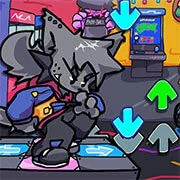
The core experience follows the same formula as other 4th Mix-era DDR titles. Arrows scroll up the screen, and players hit the matching directional pads in sync with the music. Simple in concept—deceptively tough once the BPMs climb.
What sets this entry apart is Dance Magic mode. It’s an item-based battle format built around a tug-of-war lifebar. Pulling off combos charges a gauge that fires off modifiers at your opponent, throwing their rhythm into chaos. The mode never reappeared in later DDR games until Battle mode showed up on SuperNova years later.
The PlayStation version was the only one to launch outside Japan. Non-Japanese releases shipped with slightly altered song lists and a hidden “Maniac” difficulty unlocked after clearing Basic and Trick on every track.
Versions and Platforms
The Disney Mix family spans arcades, PlayStation, Game Boy Color, and a plug-and-play TV unit. The arcade cabinet ran on Konami’s Bemani System 573 Digital hardware and showed up at a few unusual spots—Disneyland in Anaheim, California (at Innoventions) and Walt Disney World in Lake Buena Vista, Florida (at Innoventions West and Tomorrowland). Other dance games eventually pushed it out of those locations. It’s now considered one of the rarest DDR arcade releases.
A Game Boy Color version stayed exclusive to Japan. Then in December 2006, Konami teamed up with Majesco Entertainment to release a plug-and-play TV game with a built-in dance pad. That version was sold only at Walt Disney Parks and Resorts. The 8-bit hardware runs on four AA batteries, connects to a TV through composite cables, and supports just one player. Its song list shrinks to nine chiptune Disney covers across Arcade and Free Play modes.
Soundtrack
The full soundtrack across versions hits 31 tracks. Japanese exclusives lean heavily on licensed covers of non-Disney pop and disco hits—think “Macarena,” “Surfin’ U.S.A.,” “Johnny B. Goode,” and “I Want You Back.” Songs released outside Japan instead pulled in Konami originals from earlier DDR titles like 4th Mix and Konamix, including “B4U,” “HIGHER,” and “Midnite Blaze.”
The Disney covers are the real curiosity. Tracks like “Mickey Mouse March (Eurobeat Version),” “It’s a Small World,” “Zip-A-Dee-Doo-Dah,” “Chim Chim Cher-ee,” and “Supercalifragilisticexpialidocious” get reworked into eurobeat and techno arrangements. Each song is hosted by a Disney character DJ—Mickey, Donald, Pluto, Goofy, Chip ‘n’ Dale, or Huey, Dewey, and Louie.
Reception
Critics gave the game mixed-to-average marks. Metacritic landed it at 74/100, while GameRankings settled around 73%. Most reviewers said it was a safe pick for Disney fans and DDR loyalists, but a tougher sell for anyone outside that overlap.
The track list became the loudest debate. Jeuxvideo.com’s Pilou and Joe Rybicki at Official U.S. PlayStation Magazine appreciated the variety of Disney covers and unrelated pop tracks. Jeff Gerstmann at GameSpot called it an “odd mix.” David Smith of IGN actually liked the contrast—childlike Disney lyrics layered over hard techno gave the game a flavor he hadn’t found in other DDR titles. Chris Johnston at Electronic Gaming Monthly thought the covers were forgettable. Gerstmann went further, dismissing them as weak Eurobeat remixes.
Difficulty drew complaints too. Reviewers pointed out that Normal and Trick step charts felt flat and missing the high-energy patterns DDR was known for. Maniac was the only setting that put up a real fight. Johnston said replay value was thin given the small song count. Dance Magic mode split opinion—Rybicki and Pilou enjoyed it, while Johnston called it unbalanced and short.
Backgrounds were another sore spot. Gerstmann found the animation choppy. Miss Spell at GamePro went harder, saying the visuals looked stiff for a late-PlayStation Disney-licensed title and sometimes blended into the step arrows by mistake.
Game Controls
- Up Arrow Pad – Step on up arrow when prompt reaches target
- Down Arrow Pad – Step on down arrow when prompt reaches target
- Left Arrow Pad – Step on left arrow when prompt reaches target
- Right Arrow Pad – Step on right arrow when prompt reaches target
- Start Button – Begin game, pause, or confirm selection
- Select Button – Navigate menus and toggle options
As always, remember to have fun!