














The Powder Toy

The Powder Toy:  Physics Sandbox Game with 258 Elements

The Powder Toy is a free falling-sand physics sandbox game where players simulate materials, chemical reactions, and complex machines on a 2D grid. Originally built by Stanislaw K. Skowronek (also known as Skylark) and first released in 2008, it has grown into one of the most enduring physics playgrounds on the internet.

Often shortened to TPT, the game is written mostly in C++ and is open-source under the GNU General Public License v3.0. Today it’s maintained by jacob1, Simon, LBPHacker, and a wider group of GitHub contributors who keep pushing it forward.

What Makes The Powder Toy Different

At its core, this is a sandbox. There’s no goal, no score, no boss to beat. Players drop materials onto a canvas and watch how they behave — sand falls, water flows, fire spreads, gunpowder explodes. The simulation handles physics and chemistry in a surprisingly accurate way, which is part of why edgalaxy.com once described it as a strong science learning tool.

As of February 2025, the game ships with 258 distinct elements. Each one has its own behavior and reacts differently when it touches another. Mix the wrong two and things go sideways. Fast.

Build Almost Anything

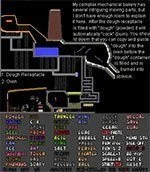
The depth here is the real draw. Players have built working circulatory systems, nuclear power plants, nuclear bombs, and even functioning computers — all inside the simulation. That’s not marketing. People genuinely use this falling-sand game to model real-world systems.

Creations can be uploaded to the game’s public server, where the community votes them up or down. Anything breaking the rules can be reported to moderators. It’s a built-in level-sharing system that’s been running for years.

Credits:

made by jacob1, Simon, LBPHacker and various other GitHub contributors. powdertoy.co.uk.

Special Thanks:

  • Stanislaw K. Skowronek (designed the original Powder Toy), Simon Robertshaw (wrote the website, current server owner), Skresanov Savely, Pilihp64, Catelite, Victoria Hoyle, Nathan Cousins, jacksonmj, Felix Wallin, Lieuwe Mosch, Anthony Boot, Me4502, MaksProg, jacob1, mniip, LBPHacker.

Libraries and other assets used:

Game Controls

  • TAB — switch between circle, square, and triangle brush
  • Space — pause and resume simulation
  • Q or Esc — quit
  • Z — zoom tool
  • S — save stamp
  • L — load last saved stamp
  • K — open stamp library
  • 0-9 — set view mode
  • P or F2 — save screenshot as PNG
  • E — bring up element search
  • F — pause and step to next frame
  • G — increase grid size (Shift + G to decrease)
  • H — show or hide HUD
  • Ctrl + H or F1 — show intro text
  • D or F3 — debug mode
  • I — invert pressure and velocity map
  • W — cycle gravity modes
  • Y — cycle air modes
  • Ctrl + E — cycle edge modes
  • B — open decoration editor (Ctrl + B to toggle decorations)
  • N — toggle Newtonian gravity
  • U — toggle ambient heat
  • Backtick (`) — toggle console
  • = — reset pressure and velocity map (Ctrl + = resets electricity)
  • [ and ] — decrease and increase brush size
  • Ctrl + C / V / X — copy, paste, cut
  • Ctrl + Z — undo (Ctrl + Y to redo)
  • Middle click or Alt + Left click — sample element
  • Mouse scroll — change brush size
  • R — rotate selected area when pasting stamps
  • F11 — toggle fullscreen

As always, remember to have fun!

How to Play:

WallsIndestructible filters that block or allow specific particle types.11
WALLWall
Blocks everything. Conductive. Transparent to ARAY.
EWALE-Wall
Acts like solid wall until electrified, then becomes transparent.
DTECDetector
Generates SPRK when any particle enters its area. Glows orange.
STRMStreamline
Shows how pressure and air are moving. Brush size is ignored.
FANFan
Accelerates air. Hold shift, drag to set direction and strength.
EHOLE-Hole
Absorbs particles; releases them when powered. Forms a black hole if overloaded.
GASWGas Wall
Allows gases (and FIRE) to pass; blocks everything else.
GRVWGravity Wall
Newtonian gravity has no effect inside a box drawn with this wall.
ENWLEnergy Wall
Allows energy particles to pass; blocks everything else.
AIRWAir-Pass Wall
Allows all particles to pass but blocks air pressure and velocity.
PWRWPowered Wall
Allows all particles to pass and conducts SPRK to anything conductive.
ElectronicsCircuit-building materials: conductors, semiconductors, switches and electricity.11
METLMetal
Generic conductor. Sparks travel along it. Melts to LAVA when hot.
WIREInsulated Wire
Conducts SPRK but is insulated from adjacent conductors.
INWRInsulator
Does not conduct electricity. Stops spark propagation.
PSCNP-Type Silicon
Semiconductor. Only conducts spark from PSCN to NSCN — the diode direction.
NSCNN-Type Silicon
Semiconductor partner of PSCN. Forms a one-way diode.
PTCTPTC Thermistor
Conducts when cold, stops conducting when hot.
NTCTNTC Thermistor
Conducts when hot, stops conducting when cold.
SWCHSwitch
Conducts only after being directly sparked. Toggles on/off.
BTRYBattery
Endless source of SPRK. Powers any adjacent conductor.
SPRKSpark
Electricity. The traveling pulse that activates electronics.
INSTInstant Wire
Conducts spark instantly across its entire length.
Powered MaterialsElements that only activate or change behavior when electricity is applied.15
PCLNPowered Clone
Clones the element drawn onto it, but only while sparked.
PBCNPowered Breakable Clone
Like PCLN, but its output element is breakable.
PIPEPipe
Transports liquids, powders and gases inside it. Preserves temperature.
PPIPPortal Pipe
Pipe variant supporting portal-style linked endpoints.
PUMPPump
When sparked, increases pressure in adjacent cells.
NPMPNegative Pump
When sparked, decreases pressure — sucks particles in.
PVODPowered Void
Deletes any particle that touches it while powered.
HSWCHeat Switch
Conducts heat between particles only when sparked.
PSTNPiston
Pushes particles in front of it when sparked. Can lift even DMND.
FRMEFrame
Moves with attached particles when adjacent to an activated PSTN.
EMPEMP
When sparked, destroys all activated electronics on screen.
WIFIWifi
Wireless spark transmitter linked by temperature channel.
PRTIPortal In
Sends particles to a matching PRTO of the same channel.
PRTOPortal Out
Receives particles from PRTI of the same channel and ejects them.
WWLDWireworld
Implements Wireworld cellular-automaton rules for logic circuits.
SensorsConditional triggers that produce SPRK when their detection rule is satisfied.5
DTECParticle Detector
Sparks when any particle (or ctype-matched particle) enters its area.
TSNSTemperature Sensor
Sparks when nearby temperature exceeds its set value.
PSNSPressure Sensor
Sparks when local pressure crosses its threshold.
LSNSLife Sensor
Sparks when a particle’s life value matches its setting.
FINDParticle Finder
Magnetically pulls a target particle type toward itself while sparked.
ForceTools that push, pull, accelerate or reorient nearby particles via fields.8
ACELAccelerator
Speeds up any particle that passes through it.
DCELDecelerator
Slows down any particle that passes through it.
VIBRVibranium
Stores heat/pressure/electron energy; explodes violently when saturated.
BVBRBroken Vibranium
Powdered VIBR. Same charging behavior but in powder form.
LDTCLogic Detector
Generates spark using particle properties as conditional input.
STKMStickman
Controllable figure. Arrow keys move; can pick up elements, use jetpack.
STK2Stickman 2
Second player stickman. Controlled by W/A/S/D.
FIGHFighter
AI-controlled stickman that attacks STKM and STK2.
ExplosivesEnergetic materials: from gentle fuses to nuclear-grade reactions.15
GUNPGunpowder
Combustible powder. Ignites easily for a quick burning explosion.
NITRNitroglycerin
Liquid explosive. Sensitive to pressure/heat. With CLST forms TNT.
C-4C-4
Plastic explosive. Stable until sparked or heated past ignition.
C-5C-5
Cryogenic explosive. Only ignites at extremely low temperatures.
TNTTNT
Trinitrotoluene. Classic explosive solid. Triggered by fire or spark.
BOMBBomb
Single particle, massive blast. Vaporizes nearly everything on impact.
FIREFire
Standard flame. Spreads to flammable materials. Cools into SMKE.
CFLMCold Flame
Inverted fire: ignites cold materials and freezes things.
FUSEFuse
Slow-burning solid fuse. Predictable rate — great for delays.
FSEPFuse Powder
Powdered fuse. Falls like a powder but still burns predictably.
FIRWFirework
Launches upward when ignited, then bursts into colored sparks.
THRMThermite
Burns extremely hot. Ignites regardless of ambient temperature.
RBDMRubidium
Reactive alkali metal. Explodes violently on contact with water.
LRBDLiquid Rubidium
Molten rubidium. Solidifies on cooling. Still explodes with water.
IGNCIgnition Cord
Powdered fuse alternative that ignites adjacent explosives in sequence.
GasesLight, expanding fluids that carry heat, fire and reactions through the air.12
WTRVWater Vapor
Hot water gas. Boiled from WATR above 100C. Cools to DSTW.
OXYGOxygen
Reacts with fire — fuels combustion and increases burn intensity.
H2Hydrogen
Light flammable gas. Combines with OXYG via fire to produce water.
CO2Carbon Dioxide
Heavier-than-air gas. Suppresses fire. Freezes to DRIC.
NBLENoble Gas
Inert. Ionizes into PLSM (plasma) when sparked. Conducts electricity.
PLSMPlasma
Extremely hot ionized gas (~9000C). From sparked NBLE or fusion.
SMKESmoke
Light gas produced by combustion. Drifts upward; cools and dissipates.
FOGFog
Low-temperature water haze. Heats above 100C back into WTRV.
GASNatural Gas
Flammable gas. Cools into OIL under pressure. Highly combustible.
RFRGRefrigerant
Heats under positive pressure, cools under negative — heat-pump fluid.
VRSGVirus Gas
Gaseous form of VIRS. Infects any non-immune element on contact.
VENTVent
Air-vent gas used in some pressure mechanics.
LiquidsMatter that flows under gravity and conforms to its container’s shape.19
WATRWater
Conducts electricity, extinguishes fire, freezes near 0C, boils near 100C.
DSTWDistilled Water
Does NOT conduct electricity. PLNT won’t grow. Made by cooling WTRV.
SLTWSalt Water
Conducts electricity, hard to freeze. Boiling separates it back to WATR and SALT.
CBNWCarbonated Water
Releases CO2 — pressure builds and can result in a small explosion.
OILOil
Flammable liquid. Vaporizes to GAS at low pressure or high heat.
DESLDiesel
Flammable liquid; ignites instead of exploding. Burns slower than oil.
FRZWFreezing Water
Freezes anything it touches into ICE.
GELGel
Viscous liquid. Absorbs water; with paste becomes clay dust.
LAVALava
Heavy liquid. Ignites flammable materials. Solidifies on cooling.
ACIDAcid
Dissolves almost everything except diamond, glass, quartz, gold, energy.
CAUSCaustic Gas
Produced when ACID interacts with WTRV. Dissolves on contact.
MERCMercury
Liquid metal. Expands when hot, shrinks when cold. Cannot burn or vaporize.
MWAXMolten Wax
Liquid wax. Hardens into WAX around 45C. Burns.
LN2Liquid Nitrogen
Very cold (-205C). Disappears whenever it touches anything warmer.
LOXYLiquid Oxygen
Made by cooling OXYG to -184C. Reacts violently with fire.
GLOWGlow
Glows when hot or pressurized. Changes color across temp/pressure.
BIZRBizarre
Liquid at moderate temps. Gas when cold, solid when hot. Paints what it touches.
PSTEPaste
Hardens into PSTS at ~0.30 pressure. Becomes brick around 480C.
SOAPSoap
Creates bubbles above ~0.50 pressure. Removes decoration. Cures VIRS.
PowdersThe game’s iconic granular matter — falls and piles under gravity.17
DUSTDust
Light, flammable powder. Made from heated dead yeast. Neutrons turn it into FWRK.
SANDSand
Common powder. Melts to LAVA at high temperatures, then cools to GLAS.
STNEStone
Heavy powder. Forms from cooled spawned LAVA. Melts again above ~700C.
SALTSalt
Dissolves in WATR to form SLTW. Conducts when wet. Reacts with CBNW.
GUNPGunpowder
Burns rapidly to FIRE and SMKE. Used for compact explosions.
CLSTClay Dust
Powdered clay. Wet and pressurized hardens. Reacts with NITR to form TNT.
PQRTBroken Quartz
Powdered quartz. Reforms into QRTZ over time when wet.
BRMTBroken Metal
Powdered metal. Conducts SPRK. Reforms into METL when melted and cooled.
BCOLBroken Coal
Powdered coal. Burns hot like COAL but flows like a powder.
SNOWSnow
Cold powder. Forms when WATR freezes at pressure 0.80 or higher.
YESTYeast
Grows in WATR at warm temps. Heated past 200C dies into DUST.
DYSTDead Yeast
Yeast that’s been killed by heat or other means.
GRAVGravel
Mid-weight powder. Falls and piles like sand.
ANARAnti-Air-Pressure
Inverts air pressure interactions in its vicinity.
FRZZFreeze Powder
Cold powder. Freezes water it touches and dissipates.
BRELBroken Electronics
Powdered remnants of destroyed electronic elements.
DRICDry Ice
Frozen CO2. Sublimates back into CO2 gas above its threshold.
SolidsDrawn matter unaffected by gravity. Metals, plastics, building blocks.24
DMNDDiamond
Indestructible. Nothing destroys or melts it.
GLASGlass
Refracts PHOT. Breakable. Made by cooling molten sand.
BGLABroken Glass
Powdered glass shards. Reforms into GLAS when re-melted.
QRTZQuartz
Crystalline. Grows from SLTW. Stronger under pressure. Scatters PHOT.
GOLDGold
Conducts SPRK. Acid-proof. High melting point.
PTNMPlatinum
Conducts like gold with higher melting point. Catalyzes ISOZ to PLUT.
IRONIron
Sparked iron in water electrolyzes H and O. Rusts in oxygen or salt.
BRCKBrick
Solid building block. Forms the shell around freshly-drawn PIPE.
BMTLBreakable Metal
Conducts SPRK like METL but shatters into BRMT under impact.
CNCTConcrete
Stacks upward continuously. Stronger than stone.
WOODWood
Flammable solid. Displaced by neutrons. Burns into FIRE and SMKE.
PLNTPlant
Grows in the presence of WATR. Killed by SLTW. Flammable.
VINEVine
Plant variant that grows in long thin strands.
WAXWax
Solid wax. Melts to MWAX at 45C.
COALCoal
Flammable solid. Burns hot, leaves no ash.
SPNGSponge
Absorbs water until saturated. Releases it when squeezed by pressure.
ICEIce
Solid water. Melts above -0.15C back to whatever its ctype is set to.
NICENitrogen Ice
Solid nitrogen. Extremely cold cooling material.
RIMEFrost
Formed when WTRV sublimates directly to solid. Becomes FOG when sparked.
ROCKRock
Made by pressurizing LAVA above 30 pressure at >1943C. Acid resistant.
PSTSSolid Paste
Hardened PSTE. Becomes BRCK around 480C.
FIBRFiber
Conducts electricity when stressed — acts as a piezo-style trigger.
FILTFilter
Filters and colors PHOT that passes through it. Programmable logic with PHOT.
RSSSSolid Resist
Reflects PHOT, absorbs GRVT, lets ELEC pass. Immune to acid, heat, pressure.
RadioactiveFissile materials and energy particles with high-energy chain-reaction behavior.14
URANUranium
Heats up over time. Doesn’t fission but acts as long-lasting heat source.
PLUTPlutonium
Fissile. When hit by neutrons, splits and releases more neutrons and heat.
DEUTDeuterium
Compressible. Releases bursts of neutrons and plasma when discharged.
POLOPolonium
Slowly heats up like uranium. Useful for thermal reactors.
ISOZCold Isotope
On platinum or with energy, transmutes into PLUT and emits PHOT.
ISZSHot Isotope
Variant of ISOZ that operates at warm temperatures.
NEUTNeutron
Energy particle. Triggers fission in PLUT. Passes through some materials.
PROTProton
Energy particle. Strengthens VIRS, destroys RSSS, powers advanced reactions.
ELECElectron
Energy particle. Different from SPRK — interacts with semiconductors.
PHOTPhoton
Light. Reflects, refracts through GLAS, scattered by QRTZ, recolored by GLOW.
GRVTGraviton
Generates Newtonian gravity. Absorbed by RSSS.
VIBRVibranium
Stores energy and detonates violently when overloaded.
WARPWarp
Teleports particles short distances. Distorts space within its area.
EXOTExotic Matter
Reactive to energy particles. Used in advanced fusion and gravity setups.
SpecialOne-of-a-kind elements with unique mechanics that don’t fit any other category.14
CLNEClone
Continuously duplicates the element drawn onto it.
BCLNBreakable Clone
Like CLNE but breakable. Its clones are destructible variants.
VOIDVoid
Deletes any particle that touches it. Channel-filtered by ctype if set.
SINGSingularity
Black hole. Sucks in and destroys everything around it. Grows as it consumes.
NBHLNewtonian Black Hole
Newtonian-gravity black hole. Pulls particles inward.
WHOLWhite Hole
Repels particles outward via the gravity simulation.
AMTRAntimatter
Annihilates almost any matter it touches, producing huge energy release.
BIZRBizarre
Three-phase substance: gas cold, liquid warm, solid hot. Paints touched matter.
GOOGoo
Sticky-ish substance. Compressible. Used for cushioning particles.
SPAWNStickman Spawn
Sets where STKM respawns after death.
SPN2Stickman 2 Spawn
Sets where STK2 respawns after death.
LOVELove
Replicates VIRS like CLNE does. Decorative spreading element.
LOLZLolz
Companion to LOVE — spreads similarly with its own pattern.
DECODecoration
Pure visual layer. Doesn’t affect simulation — used for art.
Game of LifeCellular-automaton rulesets — Conway’s Life and many Life-like variants.17
GOLGame of Life
Conway’s B3/S23. Cells live with 2-3 neighbors, born with exactly 3.
HLIFHighLife
B36/S23. Like Life but birth also on 6 — produces replicators.
ASIMAssimilation
B345/S4567. Generates expanding amorphous blobs.
2×22×2
B36/S125. Tends to produce block-like stable patterns.
DANIDay & Night
B3678/S34678. Dead and alive states are equivalent.
AMOEAmoeba
B357/S1358. Forms organic-looking blobs that drift.
MOVEMove
B368/S245. Produces gliders that move across the grid.
PGOLPseudo Life
B357/S238. A Life-like variant with chaotic growth.
DMOEDiamoeba
B35678/S5678. Forms growing diamond-shaped colonies.
LLIFLong Life
B345/S5. Patterns persist much longer than Conway’s Life.
STANStains
B3678/S235678. Forms stable inkblot-like stains.
SEEDSeeds
B2/S. Every live cell dies; explosive growth.
MAZEMaze
B3/S12345. Produces labyrinthine maze patterns.
COAGCoagulations
B378/S235678. Spreading, coagulating colonies.
GNARGnarl
B1/S1. Single-neighbor rule — produces fractal-like growth.
REPLReplicator
B1357/S1357. Every pattern infinitely replicates outward.
BRANBrian’s Brain
Three-state generations rule — produces neuron-like firing patterns.
ToolsBrush-applied modifiers — change temperature, pressure, decoration or properties.11
HEATHeat
Increases temperature of any particle the brush touches.
COOLCool
Decreases temperature of any particle the brush touches.
AIRAir
Adds positive pressure and outward airflow in the brush area.
VACVacuum
Adds negative pressure — pulls air and light particles toward the brush.
PGRVPositive Gravity
Adds positive Newtonian gravity to the area.
NGRVNegative Gravity
Adds negative Newtonian gravity — pushes particles outward.
MIXMix
Randomly shuffles particles inside the brush.
CYCLCyclone
Creates a swirling air current around the brush position.
PROPProperty Edit
Directly edits a numerical property of particles in the brush.
SIGNSign
Places a small labeled note in the world — used for annotating saves.
DECODecoration Tool
Paint visual color onto particles without affecting simulation.