Simpsons Arcade



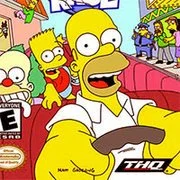


















The Simpsons Arcade Game – Classic 1991 Konami Beat ’em Up
The Simpsons Arcade Game is a side-scrolling beat ’em up released by Konami in 1991, putting up to four players in control of Homer, Marge, Bart, and Lisa as they brawl through Springfield to rescue Maggie. It was the first Simpsons video game ever released in North America, and it still holds up as one of the most beloved arcade titles of its era.
Story Setup
The plot kicks off with the Simpson family bumping into Waylon Smithers on a downtown sidewalk. Smithers has just swiped a giant diamond from a jewelry store on behalf of Mr. Burns. The diamond flies through the air and lands right in Maggie’s mouth—she happily starts sucking on it like a pacifier. Smithers grabs her and runs.
What follows is a chase across Springfield through eight stages, each ending with a boss fight. The final showdown pits the family against Smithers and then Mr. Burns himself, who shows up in a mobile battle suit loaded with weapons. Beat Burns, get Maggie back. Simple as that.
Gameplay and Combat
Each Simpson fights in a completely different way. Homer throws punches and kicks. Marge swings a vacuum cleaner. Bart smacks enemies with his skateboard, and Lisa whips a jump rope around. The variety is a big part of why the game stuck with players.
Team-up moves are where things get fun. Homer and Marge can grab each other’s ankles and roll across the screen like a wheel, plowing through anyone in their path. Homer can lift Bart or Lisa onto his shoulders so they hit at two different heights. Marge can toss either kid as a projectile. Bart and Lisa link arms for a clothesline that sweeps the screen.
Health drops when enemies land hits, and food scattered through the levels patches you back up. Players can also pick up weapons—hammers, bowling balls, mailboxes, whatever’s lying around. Two players working together can hoist heavier stuff like police cars and chuck them at enemies. Lose all your health and you lose a life. Run out of lives, and you can keep going by feeding the machine more credits before the timer runs out.
Between stages, two minigames pop up that test how fast players can mash buttons. Any spot not taken by a real player gets filled in by the computer.
Two Cabinet Versions
Konami built two different arcade cabinets. One supported two players at a time with character selection. The other had four dedicated stations—one for each Simpson—so a full crew could play at once. The Japanese release stuck with two players only.
Japanese Version Differences
The Japanese build of the game changed quite a bit. Players could chuck tiny nuclear bombs that wiped out every enemy in the blast zone. The health bar could overfill past its normal maximum by up to two extra levels when food was eaten, and it refilled at the start of every new stage. Scoring worked differently too—each enemy type was worth its own point value instead of a flat rate. End-of-level bonuses rewarded leftover health, bonus stage points actually counted toward the final score, and hidden items appeared when players hit specific objects in the environment.
Eagle-eyed fans might spot Binky and Bongo from Matt Groening’s Life in Hell comic strip making cameo appearances throughout the game.
Voice Cast
The audio pulled from two sources: archival clips from the show’s first season and brand-new recordings made just for the game. Dan Castellaneta, Julie Kavner, Nancy Cartwright, and Yeardley Smith all reprised their roles as the Simpsons family.
Ports and Re-Releases
Right after the arcade launch, Novotrade put together ports for the Commodore 64 and MS-DOS, both released in 1991 under the name The Simpsons Arcade Game.
The game went quiet for a couple decades until February 2012, when a high-definition port arrived on Xbox Live Arcade and the PlayStation Network. That version added online multiplayer, unlocked the rare Japanese 4-player edition, and threw in promotional content from the original arcade launch. PlayStation Plus members got it free at first. Then in December 2013, the game vanished from both digital storefronts with no explanation from Sony or Konami.
Electronic Arts also put out a separate iOS title called The Simpsons Arcade in December 2009. It’s a different game entirely—single player, Homer-focused, with a new plot about a thumb drive hidden inside a donut.
In June 2021, Arcade1Up announced a 30th anniversary home cabinet under license from 20th Century Games. It bundles the original arcade game with The Simpsons Bowling.
Reception and Legacy
The game was a massive hit. Thousands of cabinets were ordered the moment it debuted at the American Coin Machine Exposition in March 1991. It went on to win a Platinum award from the American Amusement Machine Association, making it one of the top three best-selling arcade machines of 1991—right behind Street Fighter II and tied alongside the Neo Geo MVS.
Over in Japan, Game Machine ranked it the eleventh most popular arcade title for the back half of September 1991. Critics liked it too. Sinclair User praised the visuals and animation. ScrewAttack later ranked it as the best cartoon-based game ever made. GameSpy inducted it into their Hall of Fame.
Game Controls
- Eight-way joystick – move your character
- Jump button – leap over obstacles and enemies
- Attack button – punch, kick, swing weapons
- Jump + Attack together – special moves and team-up attacks
As always, remember to have fun!