Super Heroes Vs. Street Fighter
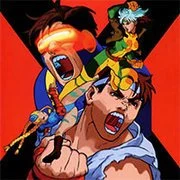


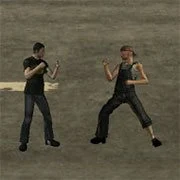
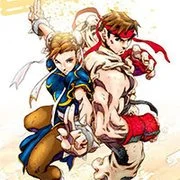
Marvel Super Heroes vs. Street Fighter: Classic Capcom Crossover Fighting Game
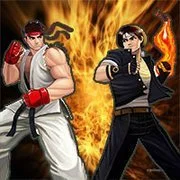
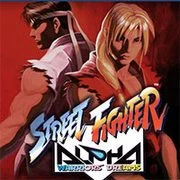
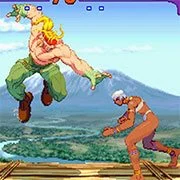
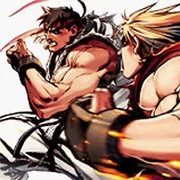
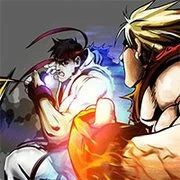
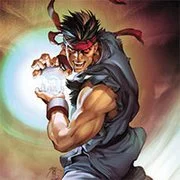
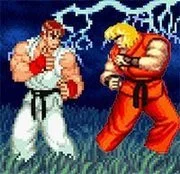
Marvel Super Heroes vs. Street Fighter is a 2D crossover fighting game where players pick two characters from the Marvel and Street Fighter rosters and battle in tag-team matches until one side’s life gauges hit zero. Released by Capcom in 1997, it’s the second entry in the Marvel vs. Capcom series and the follow-up to X-Men vs. Street Fighter.
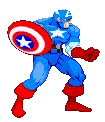
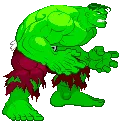
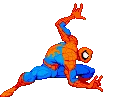
The game pulls Spider-Man, Hulk, Captain America, Ryu, Chun-Li, and a stack of other icons into the same ring. It hit arcades first, then landed on the Sega Saturn in 1998 and the PlayStation in 1999. Capcom developed and published it, with Kenji Kataoka producing.
How the Fights Work
Each player picks a team of two fighters. One steps into the match, the other waits off-screen with their own life bar. Drain both of the opponent’s life gauges and you win. If the clock runs out, whoever has more health left takes the round.
The big addition here is the Variable Assist. Tap the right combo and your off-screen partner pops in to land a special move—without forcing you to tag out. That single mechanic changed how combos worked in this game and shaped every Marvel vs. Capcom title that followed. The Variable Assist is the reason this entry matters in the series timeline.
Roster and Characters
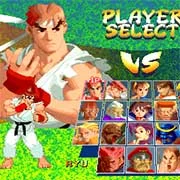
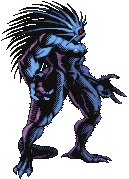
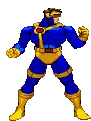
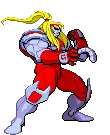
Seventeen playable fighters are available from the start. Nine come from the Street Fighter side, eight from the Marvel Universe. Most of the X-Men cast from the previous game got cut, with only Cyclops and Wolverine surviving the switch. In their place: Spider-Man, Hulk, Captain America, Blackheart, Omega Red, Shuma-Gorath, and others pulled from across Marvel Comics.
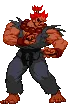
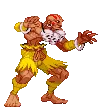
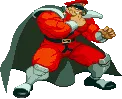
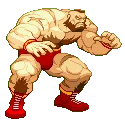
On the Street Fighter side, Ryu, Ken, Chun-Li, Dhalsim, Akuma, M. Bison, and Zangief return. Cammy and Charlie are out—though Charlie technically sneaks back as a palette-swapped secret fighter called Shadow. Dan Hibiki and Sakura Kasugano fill the empty slots.
Six secret characters round things out. They’re palette swaps of existing fighters, but each one has its own moveset properties. The roster includes Armor Spider-Man, Mephisto, U.S. Agent, Dark Sakura, and Mech-Zangief.
The Norimaro Situation
Japanese versions of the game came with an extra character: Norimaro, an original creation owned by comedian Noritake Kinashi. He had nothing to do with Marvel or Capcom directly. Marvel blocked his inclusion in international releases because he didn’t fit their brand. Decades later, the Marvel vs. Capcom Fighting Collection re-release finally made him playable worldwide.
Game Modes
Arcade Mode pits you against AI-controlled teams, building up to a fight with Apocalypse and then the final boss, Cyber-Akuma. Versus Mode lets two players go head-to-head. That’s the core across every version.
The PlayStation port adds a few exclusives. Hero Battle is an endurance mode where you fight every character you didn’t pick. Cross Over has both teams using the same characters—win a round and the AI swaps one of yours for one of theirs. There’s also a Training mode and a Gallery Mode that unlocks promo art as you hit certain goals.
The Port Story
The arcade version ran on Capcom’s CP System II board. The Sega Saturn port came out in Japan only on October 22, 1998, and it leaned on the 4 MB RAM expansion cartridge to deliver what reviewers called an arcade-perfect conversion. Frame rates, tag-team gameplay, all of it—intact.
The PlayStation port had a harder time. The console’s memory couldn’t handle the tag-team format, so Capcom switched to a traditional round-based structure like the regular Street Fighter games. That cut deep with fans. The extra modes—Hero Battle, Cross Over, Training—were the trade-off.
Development Notes
Capcom’s Seth Killian later said one of the goals was to “tone down the insanity” from X-Men vs. Street Fighter, which had a reputation for being broken thanks to infinite combos. The team wanted balance. Fans hated it. They wanted the chaos back. Capcom got the message and leaned into that energy for every Marvel vs. Capcom game that came after.
Reception
The Saturn port pulled a 77% aggregate on GameRankings and was widely praised. Jeff Gerstmann at GameSpot called it an arcade-perfect conversion but noted it felt like a near-carbon copy of the previous game. The PlayStation version landed at 74% and got more mixed reviews—mostly because of the missing tag-team mechanic and cut animation frames. Game Informer flagged slowdown issues. Still, most reviewers agreed it beat the disappointing PlayStation port of X-Men vs. Street Fighter.
In Japan, Game Machine ranked it the third most successful arcade game of August 1997.
Legacy
Marvel vs. Capcom: Clash of Super Heroes followed in 1998, opening the roster up to other Capcom franchises like Darkstalkers and Mega Man. It dropped the Variable Assist for a different system. Marvel Super Heroes vs. Street Fighter showed up again in 2020 inside an Arcade1Up home cabinet, then returned in 2024 as part of the Marvel vs. Capcom Fighting Collection: Arcade Classics—this time with Cyber-Akuma and Norimaro both playable.
Game Controls
- Joystick or directional pad: movement
- Button combinations: execute punches, kicks, and special moves
- Specific button inputs: trigger Variable Assist to call in partner
- Special command inputs: perform character super moves
Characters
Marvel
|
Street Fighter
|







Bosses
| Sprite | Character | Summary |
|---|---|---|
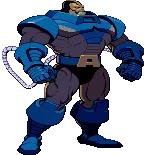 |
Apocalypse | Serves as a boss character in the game, like he did in the previous game. |
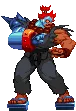 |
Cyber-Akuma (Mech-Gouki) |
An amped up, cyborg version of Akuma created by Apocalypse. Also serves as the game’s final boss. |
Secret characters
Marvel side
| Sprite | Character | Summary |
|---|---|---|
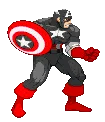 |
U.S. Agent | Although a distinctly different character than Captain America in the Marvel universe, he is just a palette swap in the game. |
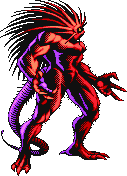 |
Mephisto | A palette swap of Blackheart. His physical basic attacks ignite the opponent when they connect, but this is just an aesthetic difference. He is Blackheart’s father in the comics. |
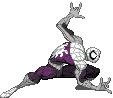 |
Armored Spider-Man | A gray version of Spider-Man that has limited armor, based on a metallic suit he wore in the comics. He jumps sightly lower than before due to the heaviness of his armor. Additionally his super combos do about 1/2 to 2/3 of Spider-Man’s. |
Street Fighter side
| Sprite | Character | Summary |
|---|---|---|
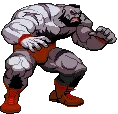 |
Mech-Zangief | A version of Zangief that can neither block nor be put into hit stun. He trades the Banishing Flat for the Siberian Breath, a Yoga Flame-like move. |
 |
Dark Sakura | A tanned-skin version of Sakura who can perform the Hadoken horizontally instead of diagonally. She possesses Akuma’s Ashura Senku and can perform the Raging Demon. |
 |
Shadow | A darkened robotic version of Charlie with powerful super moves that have incredible start-up lag. Shadow was brainwashed and suffered harsh experiments at Bison’s hands, and now serves him. |
Japanese-exclusive character
| Sprite | Character | Summary |
|---|---|---|
 |
Norimaro | An original character created and owned by Japanese comedian Noritake Kinashi who represents neither Marvel nor Capcom. He appears as a regular character only in the Japanese arcade and console versions of the game, but was removed in all the overseas versions. He portrays a sterotypical image of a nerdy, cowardly schoolboy-type guy. He is armed with a camera, throws common school items, mini-Gouki dolls, and plushies as projectiles. He also attempt to ask for his opponent’s autograph mid-battle (can be seen when the player presses the START button during a match). |
As always, remember to have fun!