Cave Story: Doukutsu Monogatari




















Cave Story: The Free Metroidvania Game That Defined Indie Gaming
Cave Story is a 2004 Metroidvania game where a robot wakes up deep inside a cave with no memory of who he is or how he got there. To find answers, he has to fight through underground tunnels, collect weapons, and slowly piece together the secret of a strange floating island. It’s a 2D platformer at its core, but the mystery hooks you fast.
Here’s the part most people find hard to believe. One person built the whole thing.
The Story Behind the Cave
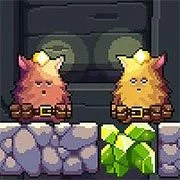
The game takes place inside a floating island that hangs above the surface world. Living there is a race of gentle, rabbit-like creatures called the Mimiga. They’re peaceful—until they eat a particular red flower that grows on the island, which throws them into a violent rage.
The island also hides something dangerous: the Demon Crown, an artifact packed with magical power. Armies from the surface have come hunting for it before, and the Mimiga have paid the price. When the player’s character wakes up in this mess, he gets pulled into a fight between the Mimiga, a cruel figure known only as the Doctor, and a handful of other survivors with their own agendas. Along the way you meet Curly Brace, another robot who, like you, can’t remember a thing about her past.
Cave Story drip-feeds its lore through conversations. You talk to characters, read letters, and gradually understand why you’re really there. And the ending you get isn’t fixed—what you do during the game decides how things turn out.
How Cave Story Plays
You control your character directly and move through the world by jumping across platforms and shooting whatever gets in your way. Beating enemies sometimes drops yellow triangular crystals. Grab enough of them and your weapon levels up, all the way to level three.
But there’s a catch that gives the combat real tension. Take a hit, and your weapon loses experience—and can even drop a level. So a single careless mistake can weaken the gun you’ve spent ages powering up. It keeps you sharp.
Enemies also drop health and missile ammo, and you’ll find permanent upgrades to your health bar and missile capacity scattered around the map. Pick up more than one weapon and you can swap between them on the fly with a button press. The Metroidvania structure means areas open up as you grow stronger, rewarding exploration over rushing ahead.
Who Made Cave Story
Cave Story was created by Japanese developer Daisuke “Pixel” Amaya under the name Studio Pixel, and it launched for Microsoft Windows on December 20, 2004. Amaya spent five years making it in his spare time—starting in college, then continuing after he landed a job as a software developer.
The retro look wasn’t just a style choice. Working in pixel art meant one person could realistically draw every sprite and background, something a 3D game would never have allowed. Amaya also skipped a tutorial level on purpose. He dislikes them. Instead, the opening hands you two paths and lets you figure out the solution yourself, an idea he borrowed from the original Metroid.
That trust in the player runs through the entire game.
Ports, Remakes, and Newer Versions
The original release was freeware, which is a big reason it spread across the internet for years. Eventually the developer Nicalis stepped in to bring it to more platforms. An enhanced version called Cave Story+ arrived on Steam in November 2011, featuring remixed music, extra modes, and the option to switch between classic and updated graphics.
There were plenty of others. WiiWare and DSiWare versions landed around 2010, the original came to the Nintendo 3DS eShop in 2012, and Nicalis also built a full 3D remake, Cave Story 3D, published by NIS America for the 3DS. A Nintendo Switch port of Cave Story+ followed in June 2017, adding two-player co-op and another fresh soundtrack. A 2026 update later folded many of those Switch additions back into the PC version.
Why Cave Story Still Matters
Cave Story earned serious critical praise and is now treated as one of the most influential indie games of its era. Reviewers compared its scope to full Metroid and Castlevania titles, which is wild for something made by a single person.
Its bigger legacy is what it proved. A solo developer with enough vision and patience could go toe-to-toe with major studios—and that idea helped spark the wave of retro-style 2D platformers and Metroidvanias that followed. If you’ve enjoyed any indie game in the last fifteen years, there’s a decent chance Cave Story helped clear the path for it.
Game Controls
- Use the keyboard or a gamepad to move your character left and right
- Press the jump button to leap across platforms and gaps
- Fire your equipped weapon at enemies and obstacles
- Toggle between collected weapons with a single button press
As always, remember to have fun!