Super Sidekicks 3: The Next Glory













Super Sidekicks 3: The Next Glory – Classic SNK Arcade Soccer Game
Super Sidekicks 3: The Next Glory is a 1995 arcade-style soccer game built around fast matches, real-world tournament formats, and a roster of 64 international teams. Developed by SNK for the Neo Geo MVS, it leans hard into pick-up-and-play action rather than the slow simulation that dominated other soccer titles of the era.
Gameplay and Style
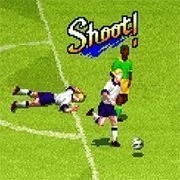
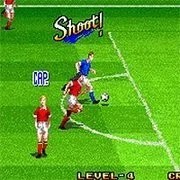
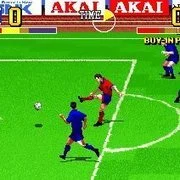
The match is shown from a top-down 2D view with sprite-based players. Most of the standard rules of soccer are in place, but the pacing feels closer to an arcade machine than a sports sim — quicker passes, snappier shots, and shorter matches. That arcade DNA is the whole point.
One of the smaller details that gives the game personality: scorers get named. The player who puts the ball in the net is tracked, and their goal count carries through your run with that team. A “Top Scorer” table sits alongside the “Top Teams” high-score board, so individual players get their own bragging rights.
Tournament Modes
Regional tournaments are the second big addition. Instead of always grinding through a World Tournament, a team can enter a competition tied to its own region — or even crash someone else’s. Useful if you’ve got a favorite squad and want fresher opponents.
The mode list mirrors real-world soccer: the World Tournament reflects the FIFA World Cup, while Europe pulls from the UEFA European Championship. South America stands in for Copa América, and the Americas Tournament covers the CONCACAF Gold Cup. Africa is built around the African Cup of Nations, and Asia gets its own bracket modeled on the AFC Asian Cup.
Teams and Regions
Players pick from 64 national teams split across 8 regions. Europe is broken into three groups covering countries like Italy, Germany, Spain, France, England, and Russia. Africa pulls in Nigeria, Cameroon, Egypt, and Morocco, among others. North America covers the United States, Canada, and Mexico, while South America brings Brazil, Argentina, Colombia, and Uruguay. Asia is split into two groups — one containing Australia, China, and Iran, the other with Japan, South Korea, and Saudi Arabia.
Development and Release
SNK both developed and published the game. Director H. Kawano led production, with Eikichi Kawasaki returning as producer after working on the previous two entries. Programming was credited to “Uzumasa Seven,” and design work went to “Kanimaro” and “Perfomaru.” Akihiro “Ackey” Uchida and Pearl Shibakichi — both from Shinsekai Gakkyoku Zatsugidan — handled the sound.
Super Sidekicks 3 launched on the Neo Geo MVS in Japan on March 6, 1995. The North American arcade release followed in April, with the Neo Geo AES port hitting April 7. A Neo Geo CD version came later — June 23, 1995 in Japan and October 1996 in North America.
It didn’t stop there. The game was bundled into SNK Arcade Classics Vol. 1 in 2008 for Wii, PlayStation 2, and PSP. It returned again on the Neo Geo X in 2013, and Hamster Corporation brought it back through the Arcade Archives line in June 2018 for Nintendo Switch, PS4, and Xbox One.
Reception
Critics liked it. They just weren’t sure it was a true sequel. Most reviewers treated Super Sidekicks 3 as a refined update to Super Sidekicks 2 rather than a clean step forward — and a few argued the previous game was actually stronger. Still, the game charted well. Game Machine listed it as the tenth most-popular arcade title in Japan in April 1995, while RePlay had it at ninth in North America around the same time.
Electronic Gaming Monthly’s reviewers called out the Neo Geo AES version’s graphics, sound, and easy playability. GamePro’s Scary Larry described it as “a fun, fast-paced game” and pointed to the responsive controls. HobbyConsolas, Superjuegos, and Player One all praised the presentation and audiovisuals, though Superjuegos thought the music was the weakest piece of the package.
The Neo Geo CD port took more heat. Micromanía and Última Generación both flagged long load times. Maximum gave it two stars out of five, citing stiff gameplay and ball physics that didn’t quite click. Next Generation came in around the same range — credit for the graphics and the new “chance” window, but the gameplay felt average to them.
Legacy
In 1998, SNK released a remake titled Neo Geo Cup ’98: The Road to the Victory, timed to coincide with that year’s FIFA World Cup. It ended up being the final Super Sidekicks entry after the fourth game underperformed. A Neo Geo Pocket Color version followed, branded as Neo Geo Cup ’98 Plus Color.
As always, remember to have fun!